
Quartz is still one of my best countertop materials ever. It just gives this clean, classy feel that makes your kitchen or bathroom look expensive without too much effort. I love that it’s smooth, easy to clean, and always seems to shine no matter how busy the day gets. But while quartz looks strong enough to survive anything, it’s not completely invincible. There are a few cleaning habits and products that can slowly ruin that beautiful shine without you even realizing it.
A lot of people use whatever cleaner they find around the house, thinking it won’t make much difference, but quartz doesn’t react well to certain chemicals or harsh tools. Some things can dull the surface, stain it, or even break down the finish over time. If you really want your quartz countertops to stay as beautiful as the day they were installed, you need to know what not to use on them.
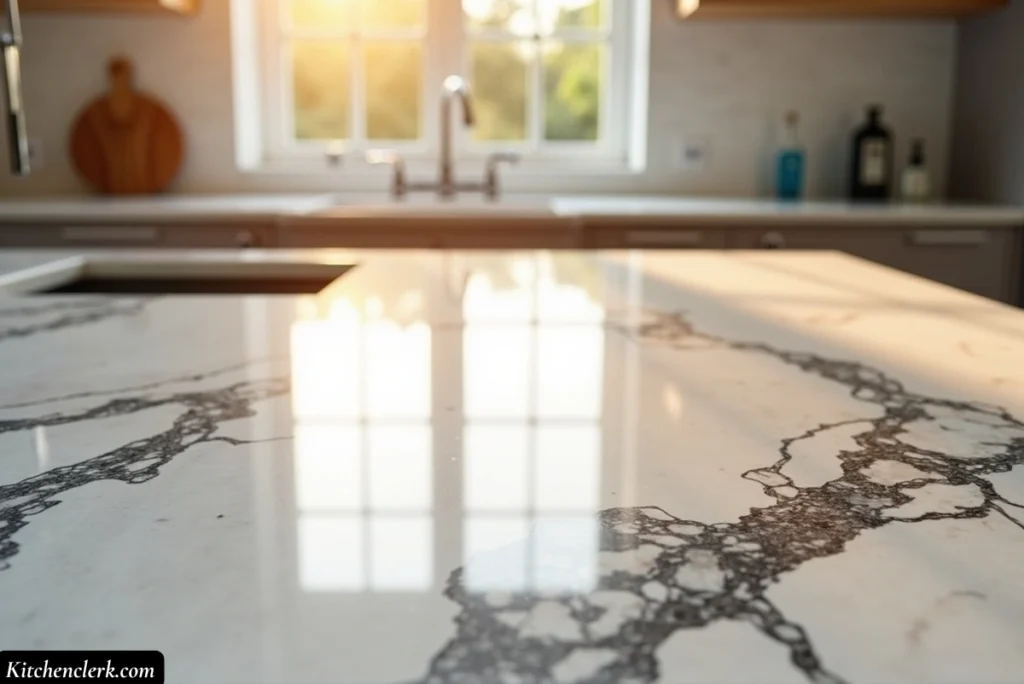
Things To Never Use On Quartz Countertops
1. Never use abrasive scrubs or scouring pads
Quartz looks like it can take anything, but abrasive scrubs and scouring pads are one of the quickest ways to dull its surface. The glossy finish on quartz is what gives it that sleek, reflective look, but when you keep scrubbing with something rough, it slowly wears off. After a while, you’ll start noticing patches that look cloudy or scratched.
I know it’s tempting to grab a steel wool or hard scrubber when something sticky dries up, but that’s one habit that can do more harm than good. Instead, soak the spot with warm soapy water for a few minutes and then wipe gently with a soft cloth or a non-abrasive sponge.
It takes a little patience, but your countertop will stay smooth and shiny for years. Even for tough messes like dried sauces or coffee stains, you can use a plastic scraper to lift the residue without harming the surface.
2. Stay away from strong alkaline cleaners
Cleaners made for ovens, drains, and heavy-duty degreasing are way too strong for quartz. These products often contain high levels of alkaline chemicals that break down the resin holding the quartz together. Once that resin weakens, you’ll notice dull spots or even discoloration that no amount of polishing can fix.
It’s always better to stick with mild dish soap, warm water, or a quartz-safe cleaner. If you ever spill one of those harsh cleaners by mistake, don’t panic, just wipe it up quickly with a damp cloth and rinse with clean water. Leaving it on even for a few minutes can cause damage you might not see right away.
3. Avoid acidic cleaners or natural acids
Vinegar, lemon juice, and other acidic cleaners are often praised for being natural and effective, but quartz doesn’t like them one bit. They slowly eat away at the shiny coating, leaving the surface dull and rough. You might not notice the change after one or two uses, but over time, it becomes obvious.
That’s why I always tell people to avoid using those homemade vinegar sprays or citrus-based cleaners on quartz. If you love natural cleaning, mix mild soap with warm water instead, it’s safe and works just as well. Acid may sound harmless, especially when it’s from everyday items like lemons, but for quartz, it’s one of the quiet destroyers that takes away its beauty little by little.
4. Don’t use ammonia-based products
Ammonia cleaners are common in most homes, especially for glass and mirrors, but they’re not a good idea for quartz countertops. Ammonia is too harsh and can cause the resin to break down slowly. Over time, your countertop might start looking faded or lose that nice smooth feel when you run your hand across it.
I made that mistake once with a glass cleaner I thought was safe, and it left a small area that never looked quite the same again. Since then, I’ve stuck to mild, pH-balanced cleaners only. If you’re ever unsure about a product, check the label, anything that mentions ammonia, bleach, or acid is better left for other cleaning tasks.
5. Keep bleach and chlorine away from it
Bleach is great for disinfecting, but it’s too strong for quartz. It can cause permanent light patches or even weaken the finish. Some people use disinfectant wipes thinking they’re mild, but many of those contain small amounts of bleach or alcohol that can still damage the resin if used often.
Quartz doesn’t need aggressive cleaning to stay germ-free. A mix of mild soap and warm water works perfectly fine. If you feel like you need something stronger after handling raw food, just rinse well after using a gentle disinfectant and dry the surface immediately. The less time bleach touches quartz, the better it will look in the long run.
6. Avoid dragging sharp or metal objects
Even though quartz is known to resist scratches, it’s not completely scratch-proof. Knives, metal trays, or pans can easily leave tiny marks, especially if you slide them carelessly across the surface. These scratches may not look serious at first, but they can catch light and make the countertop look uneven.
Always use a cutting board when chopping or slicing. If you need to move heavy kitchen appliances like blenders or mixers, lift them instead of sliding. Quartz might look hard and sturdy, but a few careless moves can leave lasting marks. It’s one of those small habits that make a big difference over time.
7. Don’t place hot pans directly on it
Quartz can handle heat to a point, but it’s not built for direct contact with very hot items. The resin that binds the quartz together reacts badly to sudden temperature changes. When you place a hot pot or baking dish directly from the oven onto it, that quick heat transfer can cause cracks, burn spots, or discoloration.
It doesn’t always happen instantly, it can build up over time and suddenly appear one day when you least expect it. Always keep a few trivets, cork mats, or heat pads nearby when you’re cooking. It’s such a simple habit, but it saves you from expensive repairs and keeps your countertop looking as flawless as the day it was installed.

8. Don’t use paint removers or harsh solvents
Acetone, nail polish remover, and paint thinners are extremely harsh on quartz. They can melt the resin or leave a dull, stained patch that’s almost impossible to fix. If you ever get paint or glue on your countertop, resist the urge to grab those strong chemicals.
Instead, scrape gently with a plastic blade or use warm, soapy water to loosen it up. For something stubborn, you can try a little isopropyl alcohol, but test it on a small hidden area first. Harsh solvents might seem like a quick fix, but they’ll do long-term harm to your countertop’s finish.
9. Don’t seal or coat quartz countertops
Unlike granite or marble, quartz doesn’t need to be sealed. It’s already non-porous, which means nothing soaks into it. Adding a sealant can actually leave streaks or a cloudy film on top that’s hard to remove.
Some people believe sealing makes it shinier or easier to clean, but it usually does the opposite. The surface ends up feeling sticky or uneven. If you want to maintain its shine, just keep it clean and dry. A quick wipe with a soft microfiber cloth after cleaning works wonders for keeping it polished and smooth without any extra coatings.
10. Don’t expose it to too much sunlight
Quartz isn’t meant for outdoor use or places with constant sunlight. The UV rays can slowly fade the color or turn white countertops yellowish. It’s something that happens gradually, so most people don’t notice until it’s too late.
If your quartz countertop is near a window that gets a lot of sunlight, try using curtains or blinds to reduce exposure during the hottest hours. Even though quartz is tough, its beauty fades faster when it’s under direct sunlight every day. Simple shading or a bit of protection can help keep its color and shine intact for years.

Conclusion
Quartz countertops are beautiful, strong, and easy to live with, but only when they’re treated right. Most of the time, it’s the small daily habits that keep them looking new, not fancy cleaners or extra coatings. Avoiding these few harmful products and practices is all it takes to protect that smooth, shiny surface. With a bit of gentle care and attention, your quartz will stay as stunning as the day it was installed, no matter how busy your kitchen gets.
