Have you ever experienced a clogged garbage disposal before? I know how annoying it feels when the sink starts filling up and the kitchen suddenly slows down. I have been there too, and it is one of those small home problems that somehow feels bigger than it should be.
It helps to know you are not alone because clogged disposals are one of the most common kitchen issues people deal with. Once you understand why it happens and what simple steps actually work, the whole thing becomes easier to handle. That is what we will walk through in this article.
What Causes A Clogged Garbage Disposal
A garbage disposal usually clogs because of the kind of things we send into it without thinking. Starchy foods like rice, pasta, and potato peels swell and turn sticky once water hits them. They settle inside the drain and become a thick paste that blocks everything. Fibrous foods like celery, onion skins, and corn husks can wrap around the parts inside and stop them from turning freely. Even small things like coffee grounds and eggshells can build up over time and sit at the bottom until they form a heavy layer that slows the whole system down.
Grease is another quiet troublemaker. It looks harmless when it goes down in liquid form, but once it cools inside the pipe, it hardens. After a while, it becomes a trap that catches other small food particles.
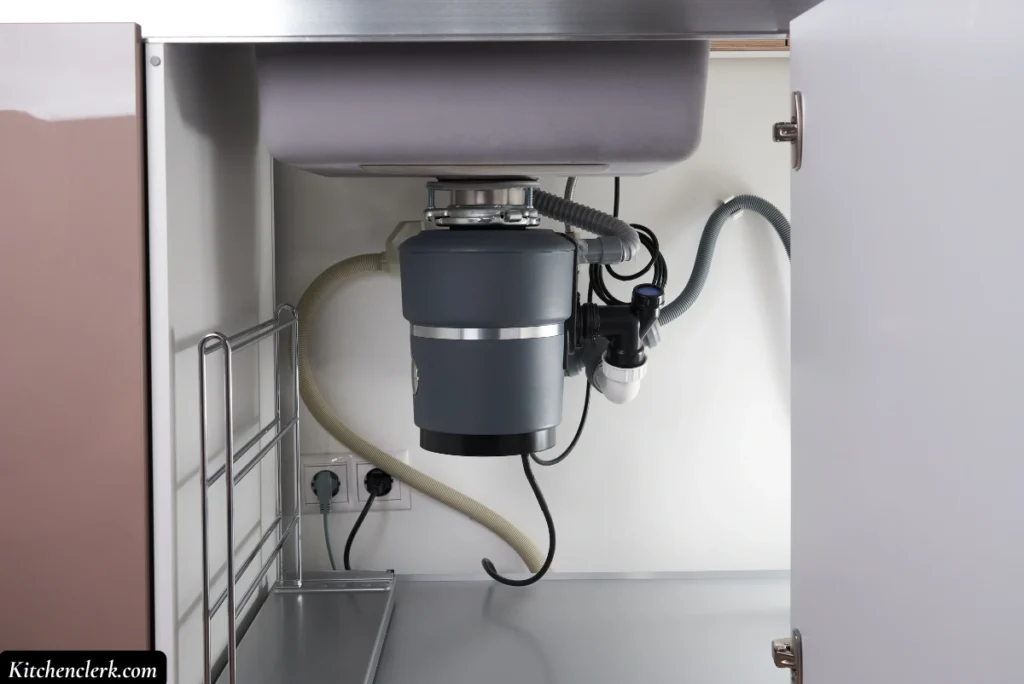
Sometimes the disposal is not even the real problem. The drain pipe or the P-trap under the sink may already be slow, so any small bit of food that goes in ends up sitting there instead of flushing through. Once all these pieces add up, the disposal gets overwhelmed, and the clog shows up.
How To Fix A Clogged Garbage Disposal
1. Turn off the power first
The first thing I always do is switch off the power. I either unplug the unit under the sink or turn off the breaker. I take this step seriously because I want to feel safe while sorting things out. Once the power is off, I take a deep breath and look inside the disposal with a small light. I never put my hand inside, so I use a pair of tongs or pliers to pick out anything sitting there.
You would be surprised how many times a small piece of bone or a forgotten spoon can stop everything from moving. Once that bit is removed, things already feel lighter. It gives you that small sense of relief that you are making progress, and that feeling alone makes the whole process easier.
2. Try to loosen the blades gently
Most garbage disposals have a tiny opening under the unit that fits a small Allen wrench. I slide the wrench in and turn it back and forth slowly. This motion helps free up anything that might be stuck around the blades. I do not rush it. If the unit does not have that opening, I use a wooden spoon handle from above and move it around carefully just to help the inside loosen up a bit. These little movements make a big difference. You can almost feel the moment when the stiff parts start giving way, and the whole thing begins to relax. It is a simple step, but it brings the disposal back to life.
3. Use a plunger when the disposal drains slowly
If the disposal turns freely but the water still refuses to go down, the clog is usually further down the drain. When that happens, I fill the sink with a few inches of water and use a kitchen plunger on the disposal side. The water gives the plunger something to hold on to, so each push becomes more effective.
I cover the other drain if it is a double sink, then I plunge gently at first and then with a little more strength. This step usually sends the blockage deeper into the pipe, where it can finally move out. Once the water starts swirling down, you are good to go. It feels like the kitchen is returning to normal, and you can breathe again.
4. Rinse with cold water and clean inside
After the clog starts moving, I turn on the cold water and let it run through the disposal for a while. Cold water helps firm up any little bits of grease so they do not melt and settle deeper in the pipe. Sometimes I also drop a few ice cubes inside with a little coarse salt. When the disposal runs again, the ice knocks off leftover residue, and the salt helps scrub the sides naturally. It feels like giving the inside of the disposal a small reset. You can even smell the difference afterward.
5. Check the P-trap if things still do not move
If, after all these steps, the water still sits in the sink, the problem might be sitting in the pipe under the sink instead of the disposal itself. The P-trap is that curved part under the drain. Sometimes food gathers there and forms a small wall that nothing can pass through. If I feel comfortable, I place a small bowl under it and loosen the nuts gently.
Once it opens, I clear out whatever is stuck and then put it back together. It is not the neatest job, but it solves the problem most time. If I am not in the mood to deal with pipes that day, I call someone who fixes these things, and that is fine too. What matters is getting the kitchen back to normal in the simplest way possible.

Wrapping Up
Fixing a clogged garbage disposal can feel stressful at first, but once you take it step by step, it becomes much easier than it looks. When you stay calm and move through the simple checks, the kitchen slowly comes back to life. It is one of those little home moments that remind you that most problems can be solved with your steady hands and a bit of patience.
