
Your kitchen faucet is one of those things you don’t pay attention to until it starts acting up. It’s a small thing, but it can throw off your whole flow in the kitchen. I know that feeling very well because nothing tests your patience like waiting forever for a simple rinse.
The good thing is that low water pressure at the kitchen faucet usually has a clear reason behind it, and it’s often something you can fix without stress. Sometimes it’s a tiny blockage, sometimes it’s a valve, and other times it’s something in your plumbing. Once you understand what’s causing it, you can get your water running properly again and enjoy your kitchen without the unnecessary frustration.
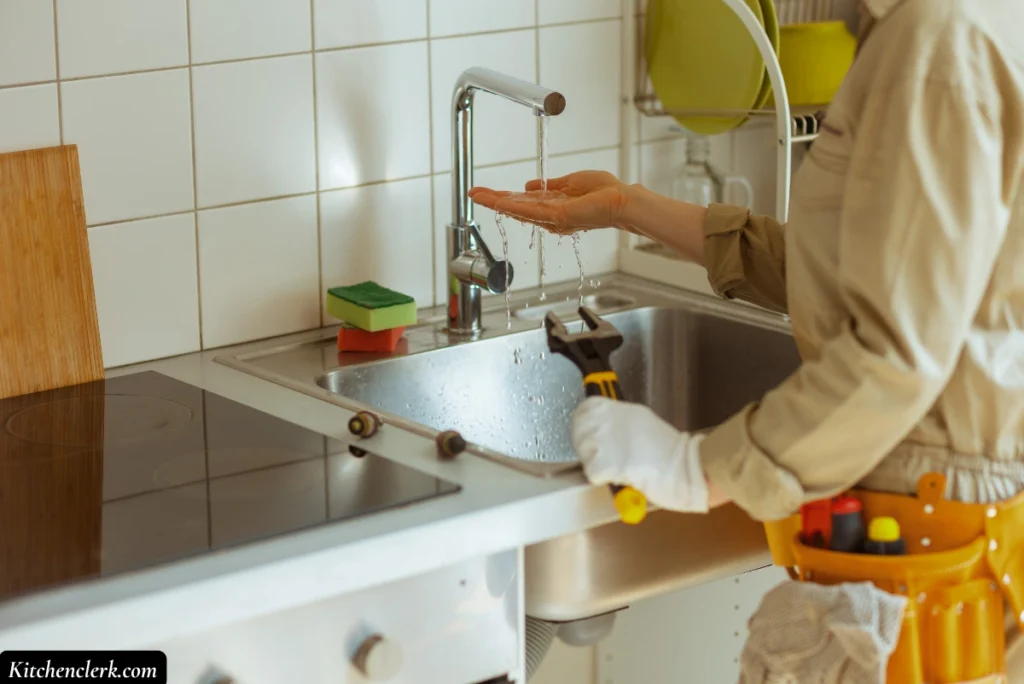
Why Your Kitchen Faucet Has Low Pressure
Sometimes your kitchen faucet just doesn’t flow like it used to, and it can be really annoying when you’re in the middle of cooking or cleaning. There are a few things that usually cause it, and most of them are pretty simple to understand once you look closely.
1. Clogged aerator
The aerator is that little screen at the tip of your faucet. Over time, minerals and tiny bits of debris can build up and make the water trickle instead of pour. Taking it off and giving it a quick clean usually fixes it fast.
2. Dirty or blocked cartridge
Some faucets have a cartridge inside that controls how water flows. If it gets clogged with sediment or minerals, the water struggles to come out properly. Cleaning or replacing the cartridge can make a big difference.
3. Partially closed or faulty shut-off valves
Under your sink, there are usually two valves, one for hot water and one for cold water. If they’re not fully open or are a bit corroded, the water pressure drops. Checking them and turning them fully open often helps a lot.
4. Kinked or damaged supply lines
The flexible hoses that bring water to your faucet can get bent, twisted, or even develop blockages inside. Straightening them out or swapping them for new ones can bring your faucet back to normal.
5. Low or malfunctioning pressure regulator
Some homes have a pressure-reducing valve on the main line. If it’s set too low or worn out, it can lower water pressure throughout the house, including the kitchen. Adjusting it or getting a plumber to replace it usually solves the problem.
6. Corroded or old pipes
In older houses, pipes can corrode or get full of scale inside. That makes it harder for water to flow, and sometimes the only fix is replacing the problem sections.
7. Sediment or mineral buildup in the water heater
If your low pressure is only with hot water, it could be your water heater. Sediment and mineral deposits inside can slow the flow. Flushing the heater or using a mild solution to clean it can help.
8. Leaks in the plumbing system
Hidden leaks in walls, under sinks, or in pipes can steal water before it reaches your faucet. Finding and fixing them often restores proper pressure.
9. Faucet design or low flow restrictor
Some faucets are made to save water and have built-in restrictors. If yours is one of these, even a clean faucet can feel weak. Replacing it with a high-flow model can make a noticeable difference.
10. Problems with water supply
Sometimes it’s not your faucet or pipes at all, but the water coming into your house. Municipal pressure or temporary supply issues can make the kitchen faucet flow weak.
How To Fix Low Faucet Pressure

If your kitchen faucet is acting slow, the good news is that most of the time you can fix it yourself without calling a plumber. It just takes a little patience and some simple steps, and you’ll be back to full water flow in no time.
1. Clean the aerator
The aerator is that small screen at the tip of your faucet, and it’s amazing how much difference cleaning it can make. Over time, little bits of minerals, debris, or even tiny food particles can get stuck there and slow the water down. All you have to do is unscrew it, take a toothbrush or a small brush, and gently scrub away the buildup. If it’s really stubborn, soaking it in white vinegar for a few hours or overnight helps dissolve the minerals. After that, rinse it off, screw it back on, and you’ll notice the water flowing much better almost immediately.
2. Inspect, clean, or replace the cartridge
For faucets with a cartridge inside, this part controls how water comes out when you turn the handle. If it gets clogged with sediment or minerals, the water flow can slow down a lot. First, turn off the water under the sink and open the faucet to let out any pressure.
Then remove the handle, which usually just takes an Allen wrench or screwdriver, and pull out the cartridge. Check for any dirt, buildup, or signs of wear. Sometimes, just soaking it in vinegar and scrubbing gently can restore flow. If it’s worn or damaged, replacing it is the best way to fix the problem completely. Once it’s cleaned or replaced, put everything back together and test the water.
3. Check the shut-off valves
Under your sink, there are usually two valves, one for hot water and one for cold water. If they’re not fully open, water pressure can drop without you even realizing it. Turn them counterclockwise until they’re all the way open and check the water again. Sometimes these valves get a bit corroded or clogged with minerals over the years, and even a slight adjustment can make a big difference. If turning them fully open doesn’t improve things, it might be time to replace the valves.
4. Inspect supply lines
The flexible hoses that bring water from the valves to your faucet can get bent, twisted, or blocked, and that restricts flow. Take a look under your sink and make sure none of the hoses are kinked or pinched. If they are, straighten them gently, and see if that helps. For hoses that are old, damaged, or full of buildup inside, replacing them is the best move.
5. Adjust or replace the pressure regulator
Some homes have a pressure-reducing valve, often called a PRV, on the main water line. If it’s set too low or has worn out over time, your water pressure can suffer all over the house, including the kitchen. If you can find it, there’s usually a small screw on top that allows adjustment. Turning it counterclockwise slightly can increase the pressure. If adjusting doesn’t work or the valve is faulty, having a plumber replace it is usually the easiest solution.
6. Deal with corroded or old pipes
In older homes, pipes can corrode inside or develop scale that makes the water flow weaker. This is a bigger issue because it affects more than just your faucet. The most reliable way to fix it is to replace the problematic sections of pipe. A plumber can help identify which pipes are causing the issue and swap them out.
7. Flush the water heater if hot water is the problem
If your low pressure only happens with hot water, the culprit could be your water heater. Over time, sediment and mineral buildup inside the tank can slow the flow. To fix this, turn off the power or gas supply first, then drain and flush the tank to remove the buildup. For stubborn scale, a mild solution like citric acid can help dissolve it. After you flush and refill the tank, turn it back on and test the water.
8. Check for leaks
Leaks in your plumbing can sneak up on you because sometimes you don’t see water on the floor or walls right away. If water is escaping somewhere, it’s taking pressure away from your faucet. One way to check is to turn off all faucets and look at your water meter, then leave water unused for a while and check it again. A change in the meter reading could mean a hidden leak. Inspect visible pipes under sinks, around the water heater, and anywhere accessible for damp spots or corrosion.
9. Consider faucet design or low-flow restrictors
Some faucets are made to conserve water, and they come with built-in flow restrictors. Even when everything is clean, these faucets can feel weak if the design doesn’t suit your needs. If this is the case, replacing the faucet with a high-flow model can make a noticeable difference.
10. Check external water supply issues
Sometimes the problem isn’t inside your house at all. Municipal water pressure can fluctuate, and occasional supply issues can make your kitchen faucet feel weak. If you suspect this is the case, contacting your water provider can help you know what’s going on. In some situations, installing a booster or pressure pump is a solution, but often it’s just a temporary supply issue that resolves itself.
Conclusion
Low water pressure in your kitchen faucet can be frustrating, but most of the time it’s something simple you can fix yourself. From cleaning the aerator to checking valves and supply lines, a little attention goes a long way. Once you tackle these steps, your water will flow strongly again, and your kitchen will feel easy and enjoyable to work in.
