
A lot of us grow up around kitchens that feel warm. This is why I have always loved ranch-style kitchens because they remind me of that feeling. They feel open, relaxed, and welcoming, which is what makes them so charming.
When I think of a ranch-style kitchen, I think of space, comfort, and a layout that actually works for everyday life. I love how these kitchens feel connected to the rest of the home and still manage to feel cozy at the same time. They are practical, and that balance is what makes ranch-style kitchens so easy to design.

1. Open-concept layout
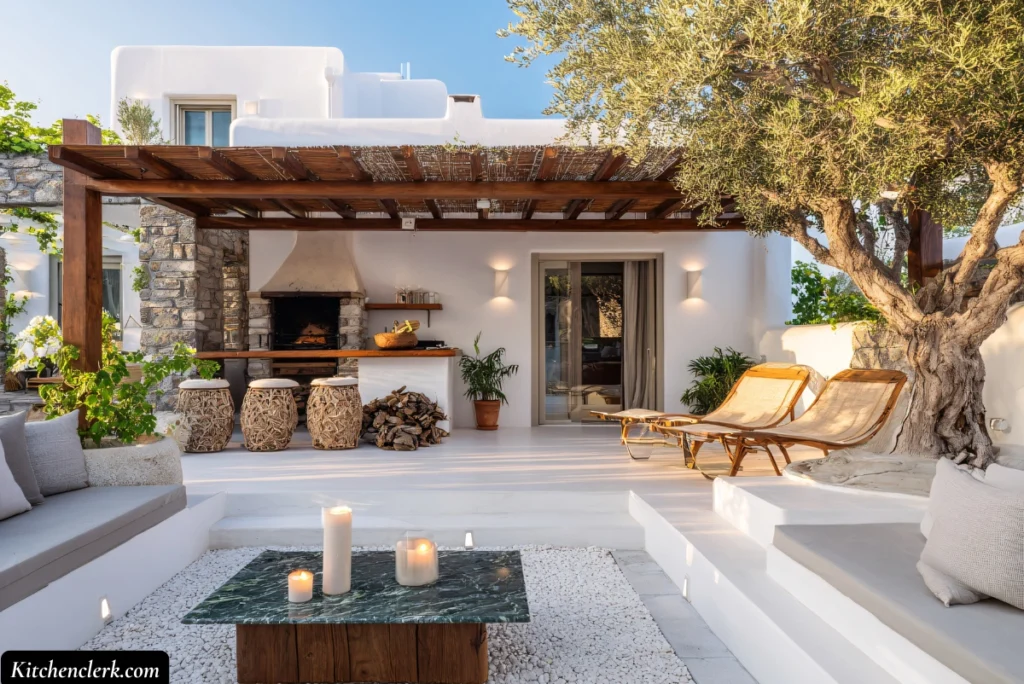
An open-concept layout works especially well in ranch-style homes because of how these houses are shaped. Most ranch homes are built on one level and tend to stretch horizontally rather than vertically. When the kitchen is closed off with walls, it can interrupt that natural flow and make the home feel segmented. Opening up the kitchen helps the layout feel continuous from one end of the house to the other.
From a design perspective, an open layout also improves how space is used. It allows better placement of major elements like islands, dining areas, and seating without forcing awkward corners or narrow walkways. It also helps natural light move more freely, especially in older ranch homes that may not have many windows in the center of the house.
2. Warm wood cabinets

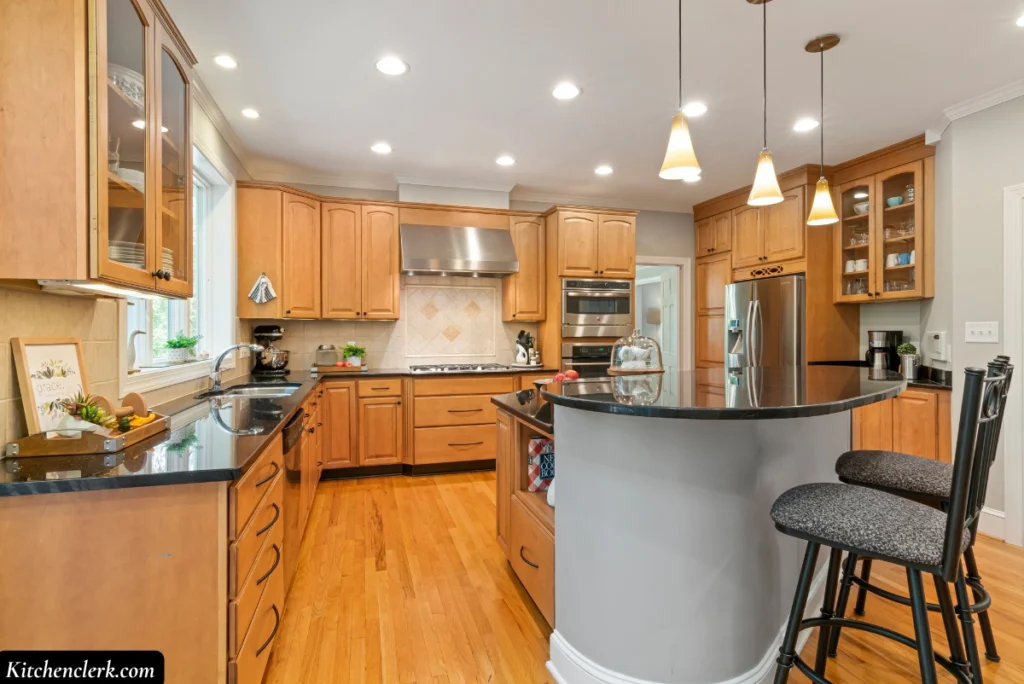
Warm wood cabinets are a strong match for ranch-style kitchens because they align with the original materials and intentions of these homes. Ranch homes were designed to feel simple and grounded, and wood fits naturally into that approach. It does not compete with the architecture and does not feel overly modern or decorative.
Wood cabinets are easier to maintain long-term. They hide everyday wear better than painted finishes and do not show chips as easily. Wood also works well with a wide range of countertops, backsplashes, and hardware finishes. This makes it easier to update parts of the kitchen later without needing a full remodel.
3. Large central island
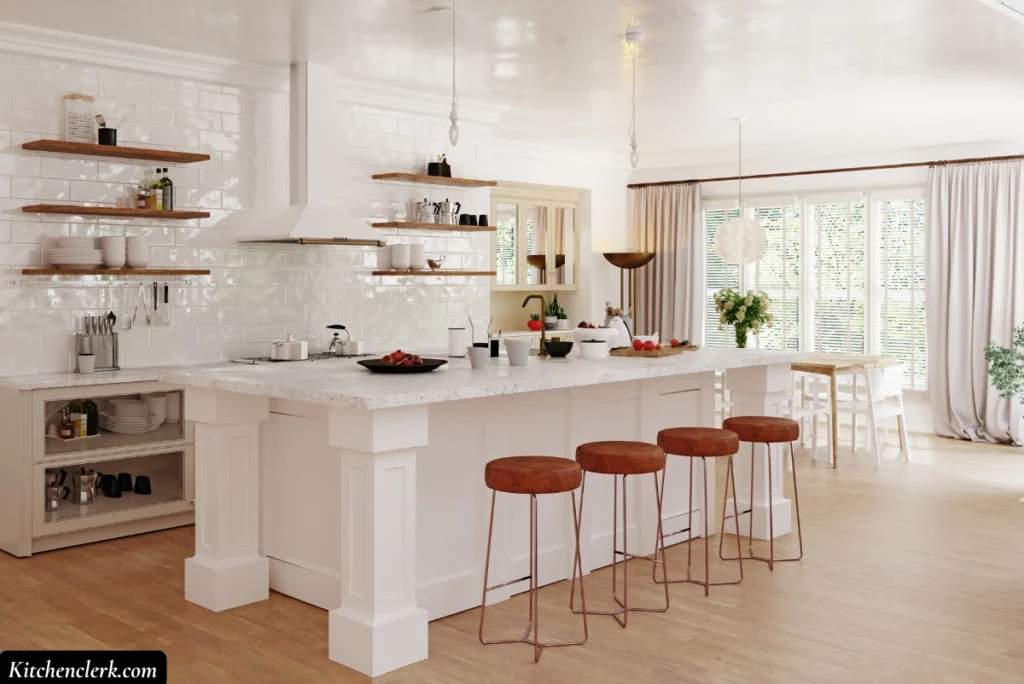
A large central island is useful in a ranch kitchen because it adds function without interrupting the open layout. Instead of adding walls or extra cabinetry, the island provides workspace, storage, and sometimes seating in one central area.
It also helps organize the kitchen visually. In open floor plans, the island defines the kitchen zone while keeping everything connected. This is especially helpful in long ranch layouts where spaces can otherwise feel undefined. A well-sized island improves workflow and makes the kitchen feel intentional rather than spread out.
4. Neutral, earthy colors
Neutral and earthy colors work well in ranch kitchens because they support the home’s simple structure and materials. These homes do not rely on bold architectural details, so strong colors can easily overwhelm the space. Soft whites, beige, cream, and muted greens keep the kitchen visually balanced.
These colors are also easier to live with over time. They reflect light better, which helps brighten low ceilings and long layouts. Neutral tones also make it simpler to change fixtures, hardware, or decor later without clashing.
5. Farmhouse or apron-front sink
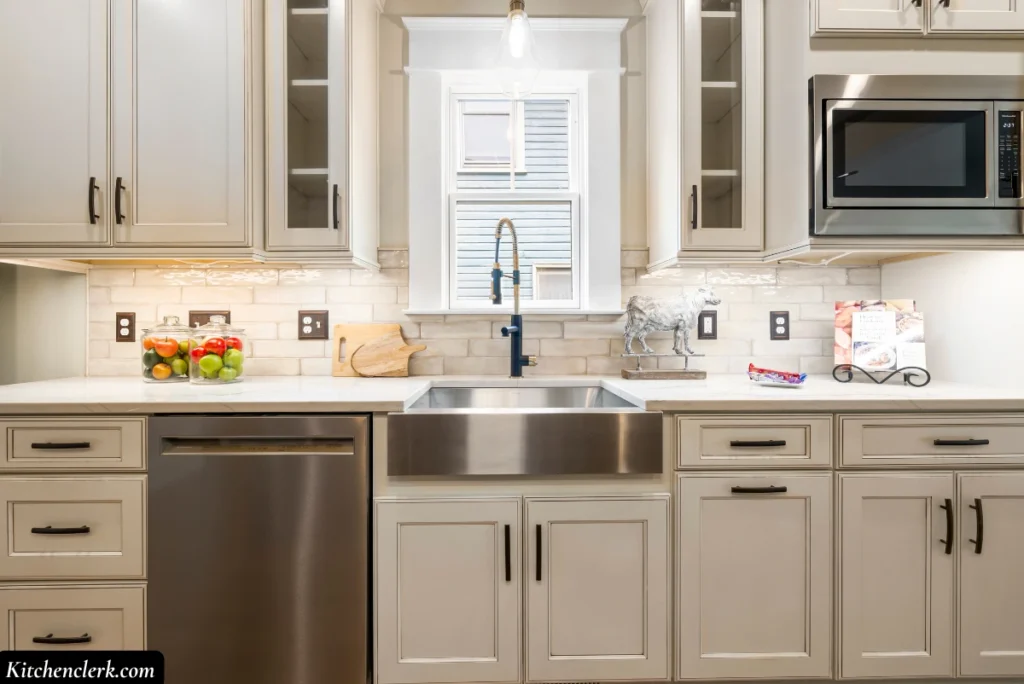
Farmhouse sinks suit ranch kitchens because they are functional and straightforward. The deep basin makes daily kitchen tasks easier, especially when dealing with larger cookware. The exposed front also works well with traditional cabinet designs often found in ranch homes.
The sink adds visual interest without needing extra decoration. It fits naturally into both original ranch kitchens and updated ones. Because it pairs well with wood cabinets and simple countertops, it remains a practical and flexible option.
6. Simple tile backsplash
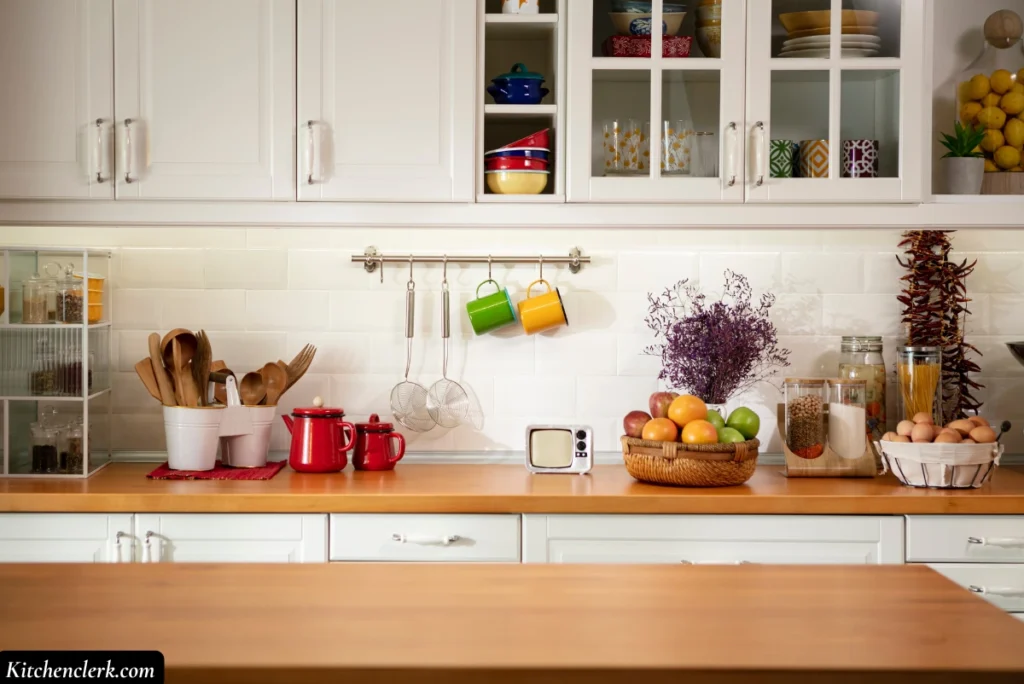
A simple backsplash is usually the best choice for a ranch-style kitchen. The goal is to protect the wall and add light texture without pulling attention away from the layout. Subway tile, ceramic tile, or light stone does this well.
Simple backsplashes are also easier to clean and maintain. They do not lock the kitchen into a specific trend, which is important for homes with a timeless style. Keeping the backsplash understated allows other materials, like wood cabinets or countertops, to stand out naturally.
7. Exposed wood beams or ceiling detail
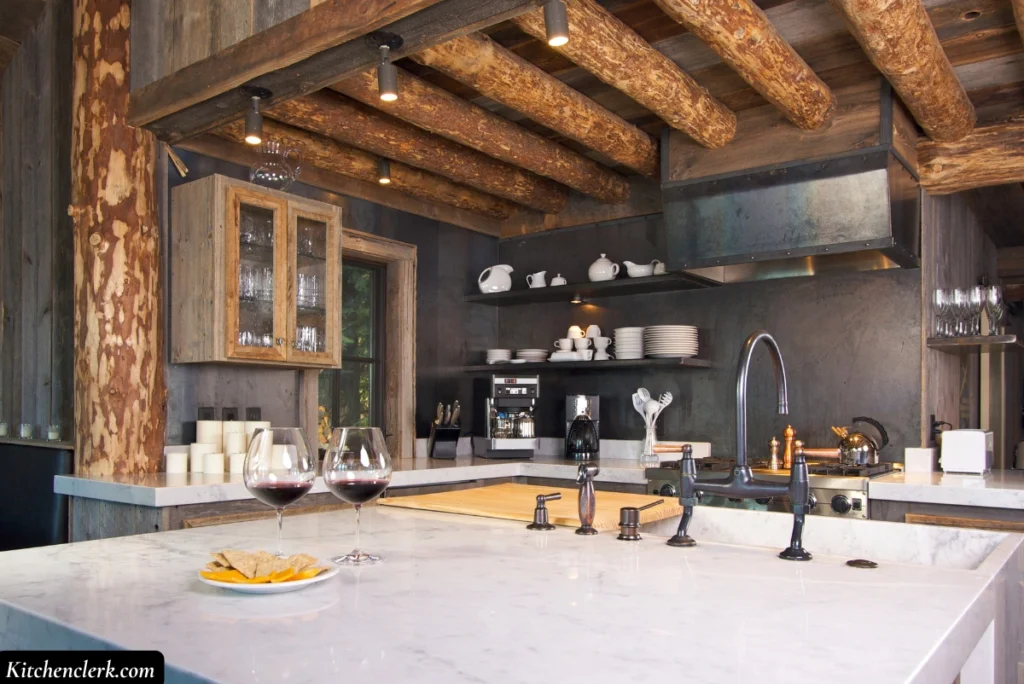
Exposed beams work well in ranch kitchens because they emphasize the horizontal lines common in these homes. They help define the ceiling without lowering it or making the space feel heavy.
If real beams are not possible, ceiling details like wood planks or subtle trim can still add structure. These details help the ceiling feel finished and intentional, especially in kitchens with open layouts where the ceiling is more visible.
8. Mix of closed cabinets and open shelves
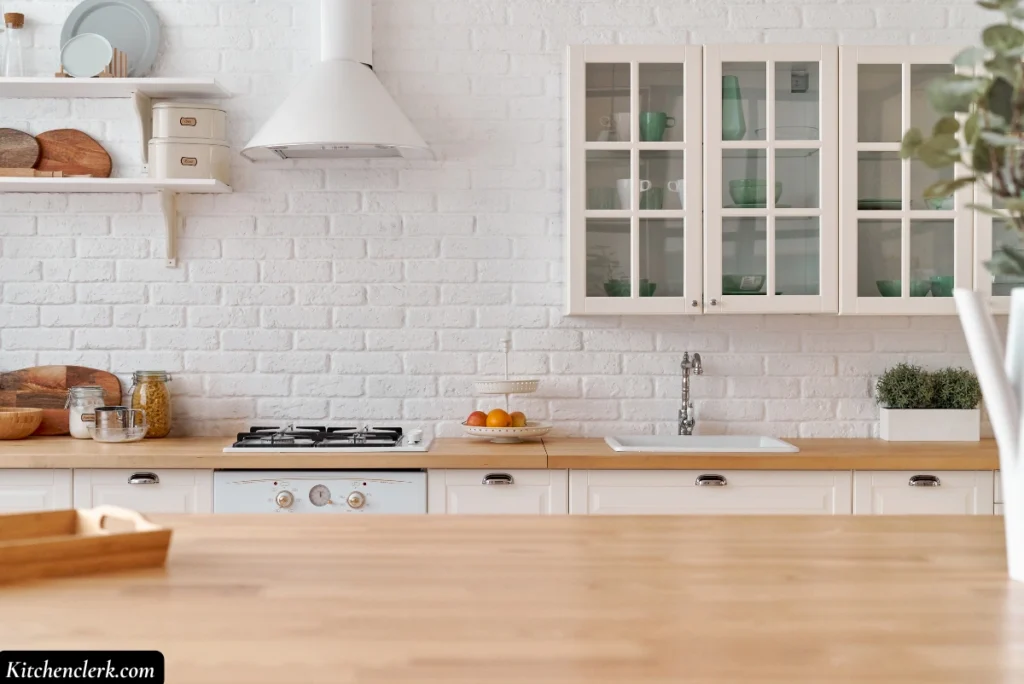
A mix of closed cabinets and open shelves creates balance in a ranch kitchen. Closed cabinets provide storage for items that are better hidden, while open shelves reduce visual bulk and keep the space feeling open.
Open shelves are especially useful in smaller sections of the kitchen where upper cabinets might feel heavy. They allow light to move more freely and help maintain the open feel that ranch kitchens are known for.
9. Vintage-style lighting
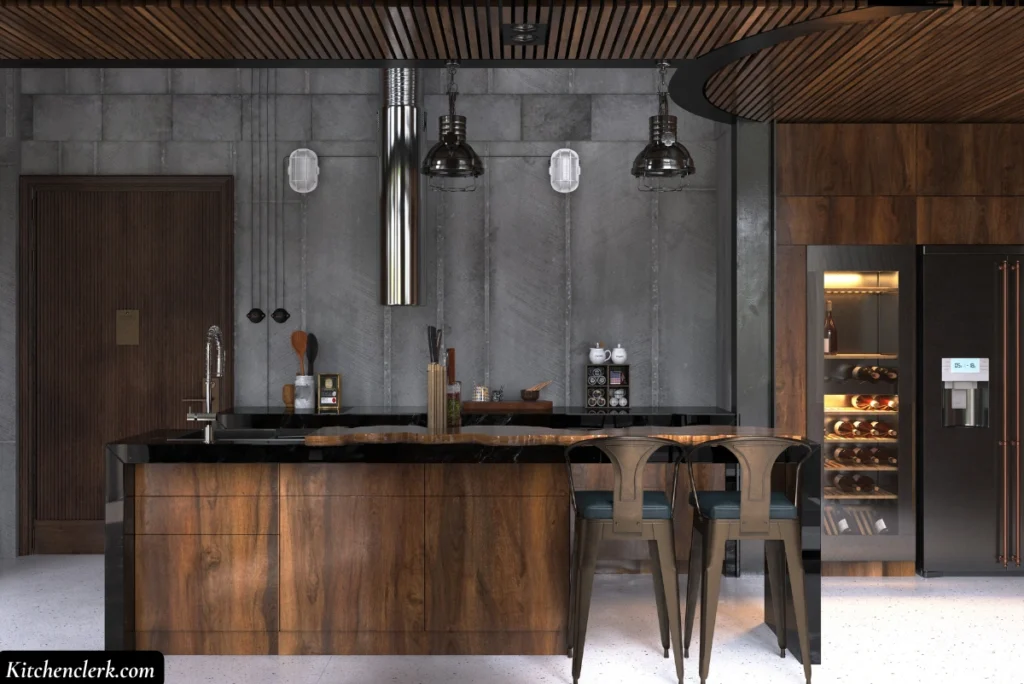
Lighting choices matter in ranch kitchens because these homes rely on simple forms and practical design. Vintage-style fixtures fit naturally because they avoid sharp lines and overly modern finishes.
Pendant lights over an island or sink provide focused task lighting, while ceiling fixtures handle general lighting. Warm bulbs help keep the kitchen consistent with the rest of the home and prevent the space from feeling harsh or clinical.
10. Wide walkways and easy movement

Wide walkways are important in ranch kitchens because the layout is usually spread out rather than compact. Adequate space between cabinets, islands, and appliances improves safety and efficiency.
Clear pathways also make it easier to use larger appliances and deeper cabinets without crowding the space. This keeps the kitchen functional and comfortable while staying true to the scale and layout of a ranch-style home.
Conclusion
Ranch-style kitchens have a special way of feeling warm, open, and easy to live in. I love how simple design choices can create a space that feels comfortable, practical, and full of character. When a kitchen feels this natural and welcoming, it quickly becomes the heart of the home.
